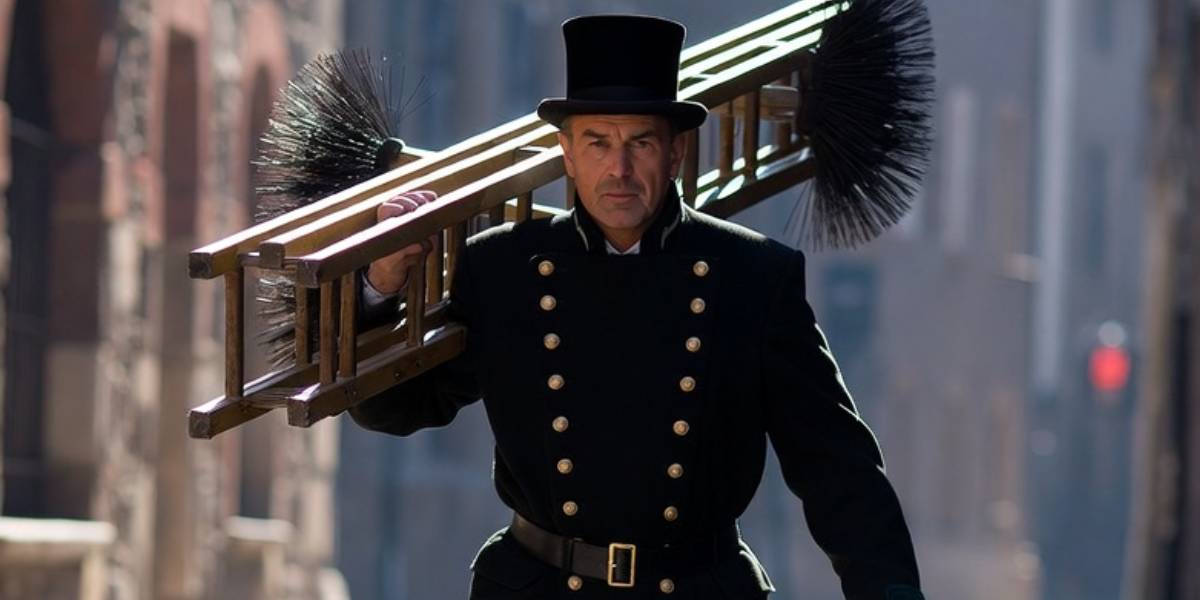
In parts of Germany, if a chimney sweep walks past you on the street, you reach out and touch one of their brass buttons. It's reflexive — like knocking on wood or picking up a penny. In England, brides will hire a sweep to show up at the church in full top hat and tails, just to shake hands on the way out. In Italy, entire alpine towns throw multi-day festivals honoring the trade.
If you're a chimney sweep in the United States, this probably sounds bizarre. You're the person who shows up in a van, gets covered in creosote, and wrestles with a homeowner's poorly maintained flue liner. Nobody's reaching for your buttons.
But across Europe, the chimney sweep occupies a strange and fascinating place in cultural mythology — somewhere between tradesman and talisman. The folklore runs deep, it's centuries old, and it reveals something interesting about how people think about the person who keeps the fire safe.
Germany: The Schornsteinfeger
No country on earth reveres the chimney sweep quite like Germany. The Schornsteinfeger — literally "chimney sweeper" — isn't just a profession there. It's a cultural institution wrapped in superstition and genuine affection.
The tradition centers on the brass buttons. German sweeps wear distinctive black uniforms adorned with brass buttons, and touching one of those buttons is considered a direct transfer of good luck. This isn't a quaint holdover that only grandmothers remember. Strangers will literally stop a sweep on the sidewalk to touch a button. It happens routinely enough that German sweeps have learned to expect it.
The cultural footprint goes further than street encounters. Chimney sweeps appear on German New Year's cards, wedding invitations, and even lottery tickets. Miniature sweep figurines — tiny black-clad figures clutching ladders and brushes — are among the most popular New Year's gifts in Germany and Austria, sold alongside marzipan pigs, four-leaf clovers, and horseshoes. The sweep is part of the official iconography of good fortune.
Why Germany in particular? The reasons are partly practical. Germany has historically maintained one of the most regulated chimney industries in the world. For centuries, sweeps operated within assigned districts — you didn't choose your sweep, your sweep was assigned to you by the state. This gave the profession an air of authority and permanence that other trades didn't have. The sweep wasn't some contractor you called. He was a fixture of civic life, like the postman or the schoolteacher.
That deep cultural integration, combined with the genuine importance of chimney maintenance in a country where wood and coal heating kept families alive through harsh winters, created a reverence that solidified into superstition. The sweep kept your home warm and your family safe from chimney fires. Associating that person with good luck wasn't much of a stretch.
England: The Wedding Day Sweep
English chimney sweep folklore takes a more specific form: seeing a chimney sweep on your wedding day is considered exceptionally good fortune. Not vaguely good. Specifically, powerfully, don't-miss-this-opportunity good.
The tradition is strong enough that it created an actual market. English sweep businesses have offered "wedding attendance" as a paid service for generations. A sweep shows up at the ceremony in full Victorian regalia — top hat, tails, soot-darkened face — shakes the bride's hand, kisses her cheek, and poses for photographs. It's part superstition, part spectacle, and entirely real. Some sweep companies still list wedding appearances alongside chimney cleaning and inspection services on their websites.
The origin story traces back to King George III. According to legend, a runaway horse charged toward the king's carriage, and a chimney sweep rushed into the street to grab the reins and stop the animal. The king, grateful for having his life saved by a soot-covered tradesman, declared that all chimney sweeps should be considered lucky.
Whether that story is historically accurate is debatable. What's not debatable is that the English took it seriously for centuries. The chimney sweep became intertwined with wedding tradition in a way that persists into the present day — a strange, charming intersection of blue-collar work and bridal superstition.

Italy: Lo Spazzacamino
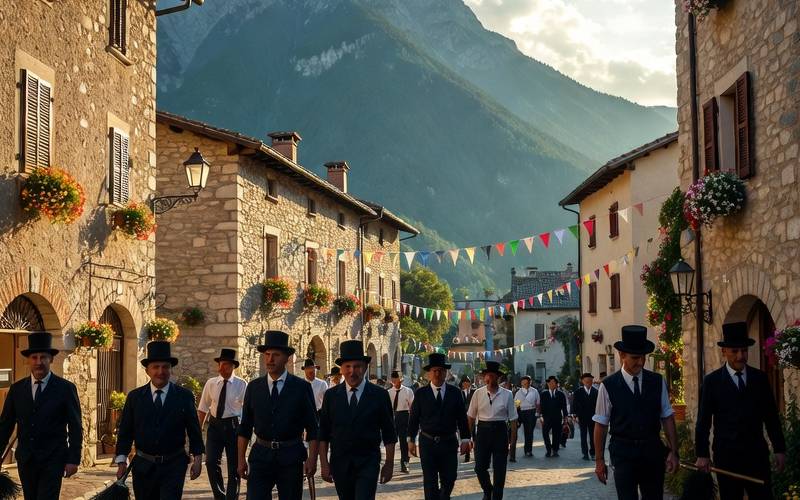
In the Italian Alps, particularly in the Valle Vigezzo region of Piedmont, the chimney sweep tradition takes the form of community celebration. The Raduno Internazionale dello Spazzacamino — the International Chimney Sweep Gathering — draws thousands of visitors to the small alpine town of Santa Maria Maggiore each year.
The festival features parades of chimney sweeps in traditional dress, music, food, and a commemoration of the young boys who once worked the alpine chimney routes. It's part trade show, part folk festival, and part memorial. The sweep is woven into the regional identity of these mountain communities in a way that goes beyond nostalgia — it's an active, living cultural tradition.
The Italian alpine connection makes geographic sense. These were communities built around heating. Stone houses, narrow flues, harsh winters, and the ever-present risk of chimney fire. The sweep wasn't a luxury service. He was essential infrastructure. The festivals honor that history while keeping it visible to generations who've never seen a climbing boy or a hand-forged flue brush.
Scandinavia and Eastern Europe: The Municipal Sweep
Across Scandinavia and Eastern Europe, chimney sweeps carry a quieter but no less significant superstitious weight. In Norwegian, Swedish, and Danish New Year's imagery, the chimney sweep appears alongside four-leaf clovers, pigs, and horseshoes — the standard European good-luck iconography. Greeting cards, table decorations, and holiday traditions all feature the distinctive silhouette of the sweep with his brush and top hat.
Norway takes the profession a step further by integrating it directly into municipal fire departments. Norwegian sweeps operate as government employees — a mandated profession tied to fire safety, not a private trade. When the state makes chimney sweeping a civic function, it carries a different kind of weight. The sweep isn't just a service provider. He's part of the public safety apparatus, right alongside the firefighter and the building inspector.
This institutional approach reinforces the superstitious reverence. The sweep is someone the government sends to your home to keep it safe. That carries authority. And authority, over enough generations, tends to acquire its own mythology.
The Top Hat: How a Work Tool Became an Icon
No discussion of chimney sweep folklore is complete without the top hat — the single most recognizable trade uniform in history.
The top hats worn by chimney sweeps were secondhand — recycled castoffs from aristocrats and undertakers, acquired through used clothing markets. Master sweeps wore them as a status symbol, distinguishing themselves from their apprentices and lending an air of respectability to a trade that was otherwise associated with soot and poverty. Over time, the hat became the universal emblem of the profession.
There's something perfectly ironic about it. The most iconic symbol of the chimney sweep profession — a trade that literally involved crawling through soot — was borrowed from the wardrobe of the upper classes. The sweep wore the gentleman's hat while doing the dirtiest work in the city. That visual contrast may be exactly why the image stuck.
Over time, the practical headgear became the symbol. That distinctive silhouette — the tall hat, the brush, the ladder — has appeared on good-luck coins, New Year's postcards, folk art, pub signs, and trade insignia for centuries. It's the most enduring piece of trade iconography in Western culture. Modern sweeps still wear top hats at festivals, parades, and — in England — weddings. The tool became the trademark.
The Santa Connection
Here's one that surprises people: the chimney sweep is woven into the origin story of modern Christmas.
Before the red-suited, Coca-Cola-era Santa Claus became universal, Dutch folklore featured a companion figure who assisted Saint Nicholas with gift delivery. This figure — associated with chimneys and soot — represented the practical mechanism by which gifts appeared inside homes. Someone had to come down the chimney. And the person most associated with traveling through chimneys was, of course, the sweep.
The explicit connection between Santa and chimneys was cemented in 1823, when Clement Clarke Moore published "A Visit from St. Nicholas" — the poem that begins "'Twas the night before Christmas." Moore's poem established the chimney as Santa's point of entry, and that image stuck permanently in the cultural imagination.
Chimneys aren't just brick and mortar. They're the stage where Christmas magic happens. The sweep's connection to Christmas runs deeper than most people realize — and it starts with the simple fact that for centuries, the chimney was the only opening into a sealed home besides the front door.
Think about that from a folklore perspective. The hearth was the center of home life. The chimney was the passage between the domestic interior and the outside world — a liminal space where fire, air, and the unknown intersected. The person who maintained that passage held a symbolically powerful position, whether they knew it or not.
May 1: Chimney Sweeps Day
May Day carries a longstanding connection to the chimney trade across Europe. In many countries, May 1 was traditionally the day that marked the end of the heating season — the day sweeps finished their rounds and celebrated with parades, festivals, and community gatherings.
The celebration has a darker undertone. The climbing boys era — when children as young as four were sent up chimneys by their masters — lasted well into the 19th century despite repeated legislative attempts to end it. One of the final catalysts for change was the death of 12-year-old George Brewster, who suffocated in a flue near Cambridge, England, in February 1875. The public outrage over his death helped push the Chimney Sweepers Act of 1875 through Parliament, finally providing real enforcement against child chimney labor.
May Day in the chimney trade serves as both a celebration and a remembrance — honoring the profession's heritage while acknowledging the exploitation that marked its early centuries. The "good luck" mythology exists alongside a history of danger and hard-won reform. The trade earned its reverence the difficult way.
Why the Luck Stuck
Here's the real question: why did these traditions survive? Plenty of trades were essential to preindustrial life. Blacksmiths, bakers, coopers, tanners — all critical, all dangerous, all woven into daily existence. None of them became good-luck symbols. Why the chimney sweep?
The answer probably comes down to what the sweep protected against. A chimney fire could destroy a home and kill a family. Carbon monoxide from a blocked flue could suffocate people in their sleep. A poorly maintained chimney wasn't an inconvenience — it was a mortal threat. And the sweep was the person who prevented that threat.
The blacksmith made your tools. The baker made your bread. But the chimney sweep kept your house from burning down with your children inside it. That's a different category of service. That's the kind of service that generates not just gratitude, but something closer to reverence.
Over generations, that reverence crystallized into folklore. The brass buttons, the wedding traditions, the New Year's figurines, the festivals — they're all expressions of the same underlying truth: the person who keeps the hearth safe, the home warm, and the family protected occupies a special place in the cultural imagination.
The luck isn't really superstition. It's gratitude dressed up as folklore. And for a trade that's been keeping people safe for centuries, that feels about right.
Want to know the full history?
From climbing boys to certified professionals — 400 years of chimney sweeping. The complete story of how a brutal child-labor trade transformed into a modern, technology-driven profession.
Read the Full History →