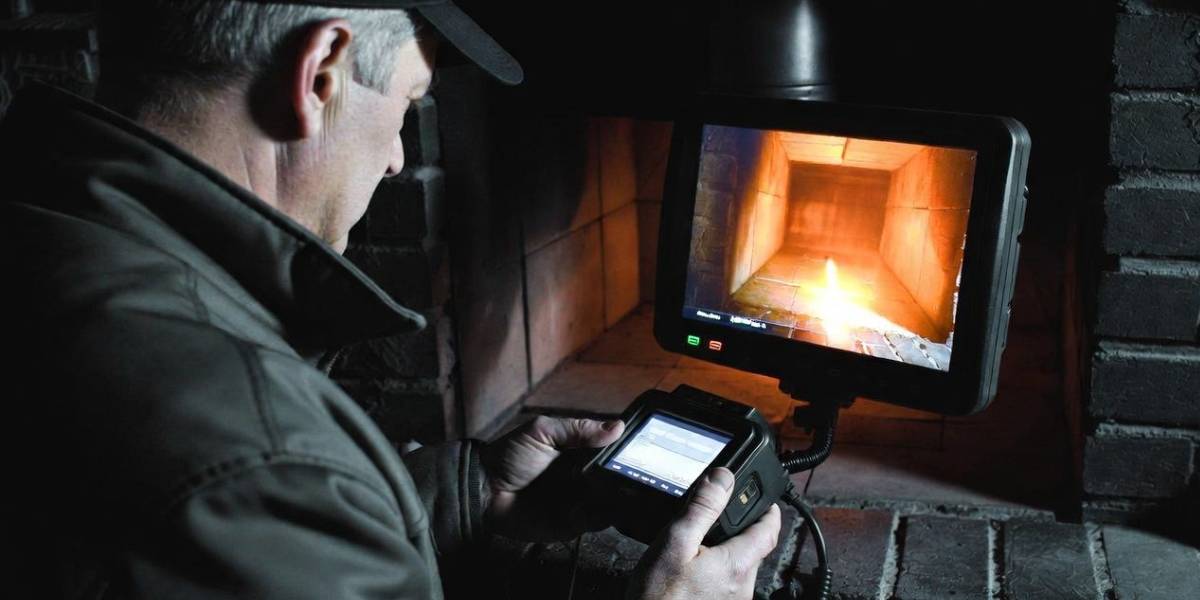
A Level 1 inspection looks at what you can see from the ground and from the firebox. That's the exterior, the damper, the visible smoke chamber, and whatever you can glimpse looking straight up. It does not include the inside of the flue liner.
Think about that for a second. The flue liner is the single component responsible for containing combustion gases and preventing heat transfer to combustible framing. And a Level 1 inspection doesn't require you to look at it.
A Level 2 inspection does. It requires a video scan — a camera inside the flue, examining the liner surface for cracks, gaps, missing mortar, deterioration, and obstructions. NFPA 211 is explicit about this: there is no such thing as a Level 2 inspection without image scanning equipment. Any inspector claiming otherwise is not meeting the standard.
This article makes three arguments. First: every new customer should get a Level 2 because you have no history to rely on. Second: if you've been in business without performing Level 2s, every unsurveyed customer is an open liability. Third: the equipment to do this right is more accessible and affordable than ever.
New Customers: You're Signing Off on a Flue You've Never Seen
When a customer calls you for the first time, you know nothing about their chimney. You don't know when it was last inspected, who did it, or what they found. You don't know if there was a chimney fire five years ago that nobody mentioned. You don't know if the previous homeowner switched fuel types without relining. You don't know if the flue tiles cracked during last winter's freeze-thaw cycle.
A Level 1 inspection won't tell you any of those things. It will confirm that the crown looks intact from the ground, the damper opens, and the firebox isn't falling apart. That's useful information. But it leaves the most critical component — the flue liner — completely unexamined.
The difference matters. If you perform a Level 1 on a new customer, clean the chimney, hand them a report that says "chimney cleaned, no visible deficiencies," and a fire starts because of cracked flue tiles you never looked at — you have a problem. The homeowner's insurance company will ask a simple question: why didn't you look inside the flue?
"Because NFPA 211 only required a Level 1" is a technically defensible answer. But it's not a comfortable one. Especially when the follow-up question is: "So you knew there was a way to examine the liner, it's standard practice in the industry, and you chose not to?"
The Seven NFPA 211 Triggers for Level 2
NFPA 211 specifies seven situations that require a Level 2 inspection. On a first visit with a new customer, you often can't confirm whether any of these have occurred:
- Sale or transfer of property — The most common trigger. If the homeowner bought the house in the last few years and never had a Level 2 done, they're overdue.
- Change in fuel type — Oil to gas, wood to gas, or any fuel switch. Different fuels produce different byproducts and require different liner specifications.
- Replacement or addition of an appliance — New insert, new stove, new furnace vented through the chimney.
- Change in flue configuration — Relining, resizing, or structural alteration.
- After a malfunction — Chimney fire, flue gas spillage, persistent draft problems, carbon monoxide alarms.
- After an external event — Earthquake, lightning strike, building fire, severe storm, or any event likely to cause structural damage.
- Change in venting configuration — Such as removing a furnace from a common-vented system, leaving an orphaned water heater.
Here's the practical reality: when you show up at a new customer's house, you often don't know whether a fuel change happened before they moved in, whether the previous owner had a chimney fire they didn't disclose, or whether the appliance was replaced at some point. The homeowner may not know either. A Level 2 resolves all of that uncertainty in one visit.
Liability Protection Is the Floor, Not the Ceiling
This isn't about covering yourself legally — though it absolutely does that. It's about doing the job right. A chimney sweep who cleans a flue without ever looking at the liner condition is working blind. You're removing deposits from a surface you've never examined. If that surface has cracks, gaps, or missing mortar joints, the deposits were the least of the problem.
A cracked flue tile can allow combustion gases — including carbon monoxide — to escape into the home's living spaces. It can allow heat transfer to combustible framing materials inches away. These aren't hypothetical risks. They're documented causes of house fires and carbon monoxide poisonings. And they're invisible from the firebox or the rooftop.
The only way to see them is to put a camera in the flue.
Already in Business? Your Existing Customers Need One Too
If you've been sweeping chimneys for a year, three years, ten years — and you haven't performed a Level 2 on every one of your customers — you have an open liability exposure on every single one of those accounts.
That's not an exaggeration. NFPA 211 is the industry standard. It's the benchmark that attorneys, insurance adjusters, and expert witnesses use when something goes wrong. If a chimney fire or carbon monoxide incident occurs at a home you've been servicing, the question won't be "did you clean it?" The question will be "did you inspect the flue liner?" And if the answer is no — if all you ever did was Level 1 cleanings without ever putting a camera in the flue — you're exposed.
It doesn't matter that the customer never asked for a Level 2. It doesn't matter that they were happy with the cleaning. The standard exists, the technology to meet it is readily available, and you chose not to use it. That's the argument that gets made in court.
Go Back and Do Them
If you have existing customers who've never had a Level 2, schedule them. Work through your customer list and get a camera in every flue you're responsible for. This isn't about generating extra work — it's about closing a liability gap that's been open since you started.
If price is a concern for the customer, offer a discount. Bundle it with their annual cleaning. Absorb part of the cost if you have to. A discounted Level 2 that documents the flue condition is infinitely better — for you and for your customer — than no Level 2 at all. The documentation protects the homeowner by identifying problems before they become emergencies. And it protects you by demonstrating that you looked, you found what was there, and you reported it.
Even if you have to eat some of the cost in the short run, the long-term benefit is clear. Every Level 2 you perform creates a documented baseline for that chimney. If you recommend a repair and the customer declines, that's their right — but you have a record showing you identified the issue and communicated it. If something happens later, you can produce the report, the photos, the video, and the signed acknowledgment.
Without a scan, you have nothing. Just cleaning receipts for chimneys you never actually examined.
How to Bring It Up
A baseline Level 2 isn't technically required by NFPA 211 unless one of the seven trigger conditions applies. But most homeowners have had at least one trigger occur without realizing it. The easiest way to open the conversation is a simple, friendly question during your next visit: "Do you know if a Level 2 video inspection was ever done on this chimney — maybe when you bought the house?"
Most of the time, the answer will be no. And that's not their fault — most homebuyers don't know it's supposed to happen, and most home inspectors don't perform one. But it means there's a gap. NFPA 211 calls for a Level 2 at every property transfer. If it never happened, there's a flue liner that's never been examined.
That's your opening — not as a sales pitch, but as a professional who genuinely cares about their safety. You've invested in camera equipment. You have the ability to look inside the flue and find things that would otherwise go undetected. Offer it as something you're bringing to your services because it's the right thing to do.
Offer it free or discounted this first time around. Think about what might be hiding in those flues — damage that's been there for years, maybe since before you ever touched the chimney. Cracks, deteriorated mortar joints, liner gaps that nobody has ever seen because nobody ever looked. You're bringing a new capability to your services, and that first scan could be the one that finds the problem before it becomes a fire or a CO incident. That matters more than the fee.
Once that initial Level 2 is done and documented, those customers go back to their regular annual Level 1 cleaning and inspection. Level 2s have a time and place — property transfers, appliance changes, after an event. They're not an annual service. But every customer deserves that first one.
The Equipment: What You Need to Do This Right
A Level 2 inspection requires image scanning equipment. That means a camera inside the flue. The good news: the equipment that used to cost $3,000+ has come down dramatically in the last five years. A professional chimney camera system is now within reach of any working sweep.
Professional Chimney Camera Systems
This is the standard. A purpose-built chimney camera gives you everything you need to perform a thorough, defensible Level 2 inspection:
- Flexible cable — navigates offsets, bends, and tight flue geometries that rigid tools can't reach.
- Built-in LED array — illuminates the full bore of the flue, even 25+ feet deep. No guessing in the dark.
- Fish-eye or wide-angle lens — captures the entire circumference of the liner in a single frame. You see every crack, every joint, every gap in context.
- DVR recording — creates clean, archivable video documentation. No fumbling with screenshots. The recording is your legal record.
- Professional presentation — when a homeowner sees you pull out purpose-built inspection equipment, it reinforces that they hired a professional. That matters for trust, and trust matters for safety — a customer who trusts your expertise is more likely to act on your recommendations.
Here's what the market looks like right now:
| Tier | Price Range | Examples | Best For |
|---|---|---|---|
| Entry | $200-$600 | QBH, Depstech, Teslong borescopes | New sweeps adding inspection services. USB connection to phone/tablet. Flexible cable, built-in LEDs. |
| Mid-Range | $600-$1,500 | Ridgid SeeSnake, Wohler VIS 250/350 | Working sweeps performing regular Level 2s. Integrated monitor, longer cable, fish-eye lens, better illumination. |
| Professional | $1,500-$3,000+ | Wohler VIS 500/700, ChimScan, Sweeper Peeper | Full-time inspection specialists. DVR recording, articulating heads, interchangeable lenses, maximum reach and image quality. |
A mid-range system like the Wohler VIS 350 or a Ridgid SeeSnake is the sweet spot for most sweeps. It gives you professional-grade imaging, reliable documentation, and the durability to handle daily use. Equipment that cost $3,000+ five years ago now lives in this $600-$1,500 range.
What You're Looking For
Whether you're using a $600 borescope or a $2,500 ChimScan, the deficiencies you're scanning for are the same:
- Cracks in clay tile sections — horizontal, vertical, or spalling. Thermal shock, settlement, and chimney fire damage all leave visible fractures.
- Missing or deteriorated mortar at tile joints — gaps between liner sections allow flue gases to escape into the chimney structure and potentially into living spaces.
- Offset or misaligned tiles — sections that have shifted create ledges where creosote accumulates and gaps where gases escape.
- Gaps or separations between liner sections — any discontinuity in the liner is a potential pathway for heat transfer to combustibles.
- Moisture damage — efflorescence (white mineral deposits), erosion, staining, or softened liner surfaces indicate water intrusion.
- Obstructions — bird nests, debris, collapsed material, or anything restricting the flue.
- Remaining creosote after cleaning — especially Stage 2 (hardened, tar-like) or Stage 3 (glazed, rock-hard), which indicate the system should not be used until addressed.
If You Don't Have a Camera Yet
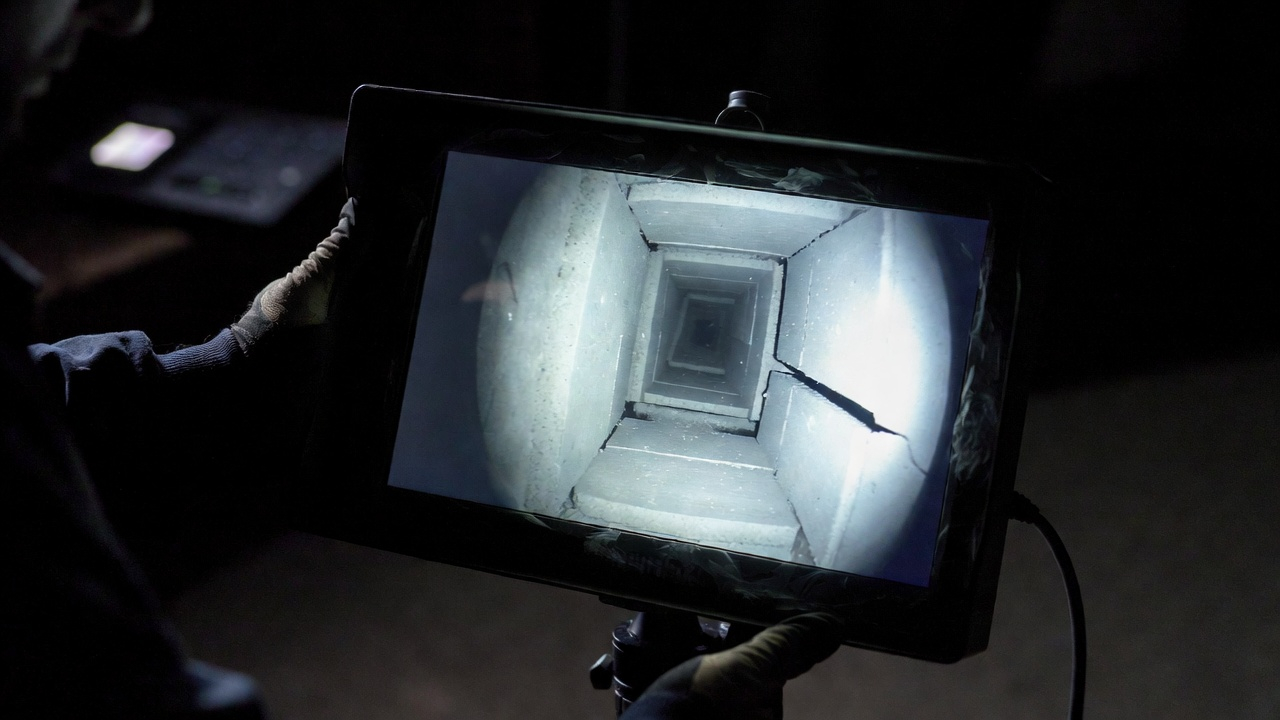
If you're just starting out and can't afford a dedicated system yet, you can use a smartphone to document what's visible from the firebox opening — recording video up into the flue with a bright LED light for illumination. NFPA 211 requires "image scanning equipment" without specifying a brand or price point, so a phone can technically satisfy the requirement in limited situations.
But let's be realistic about what a phone can't do. It can't navigate the full length of a flue. It can't reach past offsets. It doesn't have the illumination to light up a liner 20 feet above the damper. It can't give you 360-degree coverage of each tile section. And it doesn't look professional to a homeowner watching you work. A smartphone is not a chimney camera — it's a temporary compromise at best.
Use the income from your first few Level 2 inspections to invest in a proper camera system. Even an entry-level borescope at $200-$400 is a massive upgrade over trying to make a phone do something it wasn't designed for. The image quality, the reach, the documentation capability, and the professional impression are all worth the investment. Get the right equipment as fast as you can — your inspections and your reputation will be better for it.
Show the Customer What You See
One of the most powerful things about a video scan — whether from a phone or a professional camera — is that it makes the invisible visible. Homeowners can't see inside their chimney. They have no mental model for what a cracked flue tile looks like or why a missing mortar joint matters. When you show them the video, they understand instantly.
This isn't about persuasion. It's about informed consent. A homeowner who sees a cracked liner on video and chooses not to repair it has made an informed decision. A homeowner who was never shown the problem — because you never looked — was never given the chance to protect their own family.
That's the core of it. The camera isn't a sales tool. It's how you give the homeowner the information they need to make decisions about their own safety.
Documentation That Stands Up
Every scan should produce documentation that goes into your records:
- The full video file — date-stamped, labeled with the customer name and address. Store it. Cloud backup is cheap.
- Screenshots of deficiencies — pull still frames from the video showing any cracks, gaps, obstructions, or damage. Annotate if possible.
- Written findings — a summary noting what you observed, where in the flue, and what you recommend. Reference NFPA 211 deficiency categories where applicable.
- Customer acknowledgment — if you identify issues and recommend repairs, get a signature acknowledging the findings and recommendations. If they decline service, document that too.
Retain everything for a minimum of 7-10 years. Digital storage is essentially free. Attorneys recommend indefinite retention. A report from five years ago can be the difference between defending yourself successfully and having no defense at all.
Quick Reference: NFPA 211 Inspection Levels
| Level | What It Covers | Camera Required? | When Required |
|---|---|---|---|
| Level 1 | Readily accessible exterior and interior components — firebox, damper, visible smoke chamber, visible flue, cleanout. Ground-level exterior. | No | Annual minimum. Same appliance, same fuel, no changes, no events. |
| Level 2 | Everything in Level 1 + accessible attics/crawl spaces/basements + clearance measurements + internal video scan of entire flue liner. | Yes — mandatory | Property transfer, fuel change, appliance change, after malfunction/event, flue alteration, venting change. |
| Level 3 | Everything in Levels 1 & 2 + concealed area access with removal of chimney/building components as needed. | Yes | When Level 1 or 2 reveals suspected hidden hazard requiring physical verification behind walls, floors, or concealed spaces. |
The Standard of Care
Every customer who walks through your door trusts you to tell them whether their chimney is safe to use. A cleaning tells you the deposits are gone. A Level 1 tells you the visible components look okay. But only a camera inside the flue tells you whether the liner — the single component responsible for containing the fire and the gases — is structurally intact.
The equipment to do this right is more affordable and accessible than it's ever been. A mid-range chimney camera system costs less than the revenue from a handful of Level 2 inspections. There's no financial barrier that justifies skipping the scan.
And there's no professional justification either. If you're signing off on a chimney without ever looking inside the flue, you're not inspecting — you're guessing. Your customers deserve better than that. And so does your liability exposure.
Level 2 isn't the premium service. It's the standard of care.